

The Depth of Plinko Slot Physics Simulation
When it comes to understanding games of chance, few can rival the captivating nature of Plinko. The Plinko slot physics simulation depth https://plinko-game.co.nz/ game, popularized by television and now a staple in online gambling, provides a unique blend of randomness and strategy that captivates players around the world. In this article, we will delve deep into the physics that underpins the Plinko slot simulation, offering insights that go beyond simple gameplay and exploring how these principles can enhance our understanding of the game itself.
What is Plinko?
Plinko is a game that involves dropping a disc down a vertical board filled with pegs. When the disc hits the pegs, it bounces in a random direction until it reaches the bottom, where it lands in one of several slots, each corresponding to different prizes or payouts. The simplicity of the game appeals to players of all ages, making it a favorite in both physical and online gaming venues.
The Physics of Plinko
At its core, Plinko is an example of a random walk, a mathematical concept that describes a path consisting of a succession of random steps. The journey of the disc can be modeled using principles from physics, particularly the laws of motion, gravity, and energy transfer. Here, we will break down these principles:
1. Gravity’s Role
Gravity is the primary force acting on the Plinko disc. Once the disc is released from its starting point, it accelerates downwards due to the gravitational pull. This acceleration influences the speed and momentum of the disc, playing a crucial role in how it interacts with the pegs. The gravitational force can be quantified by Newton’s law of gravitation, which states that the force of gravity acting on an object is proportional to its mass and inversely proportional to the square of the distance from the center of the Earth.
2. Collisions and Energy Transfer
As the disc encounters pegs on its way down, it experiences a series of elastic collisions. In these collisions, the kinetic energy of the moving disc is transferred to the pegs, causing it to change direction. The angles at which the disc hits the pegs determine its path, and this randomness adds to the excitement of the game. Understanding the physics of these collisions can offer insights into predicting the most likely outcomes in the game.
3. Friction and Air Resistance
While gravity does most of the work in guiding the disc’s path, friction and air resistance also play a role in the dynamics of the game. The friction between the disc and the pegs, as well as the drag force from air, can affect how far the disc bounces and how much energy it loses during collisions. Though these forces might seem negligible in some contexts, in a game like Plinko where small changes can have significant impacts on the final outcome, they are worth considering.
The Simulation of Plinko
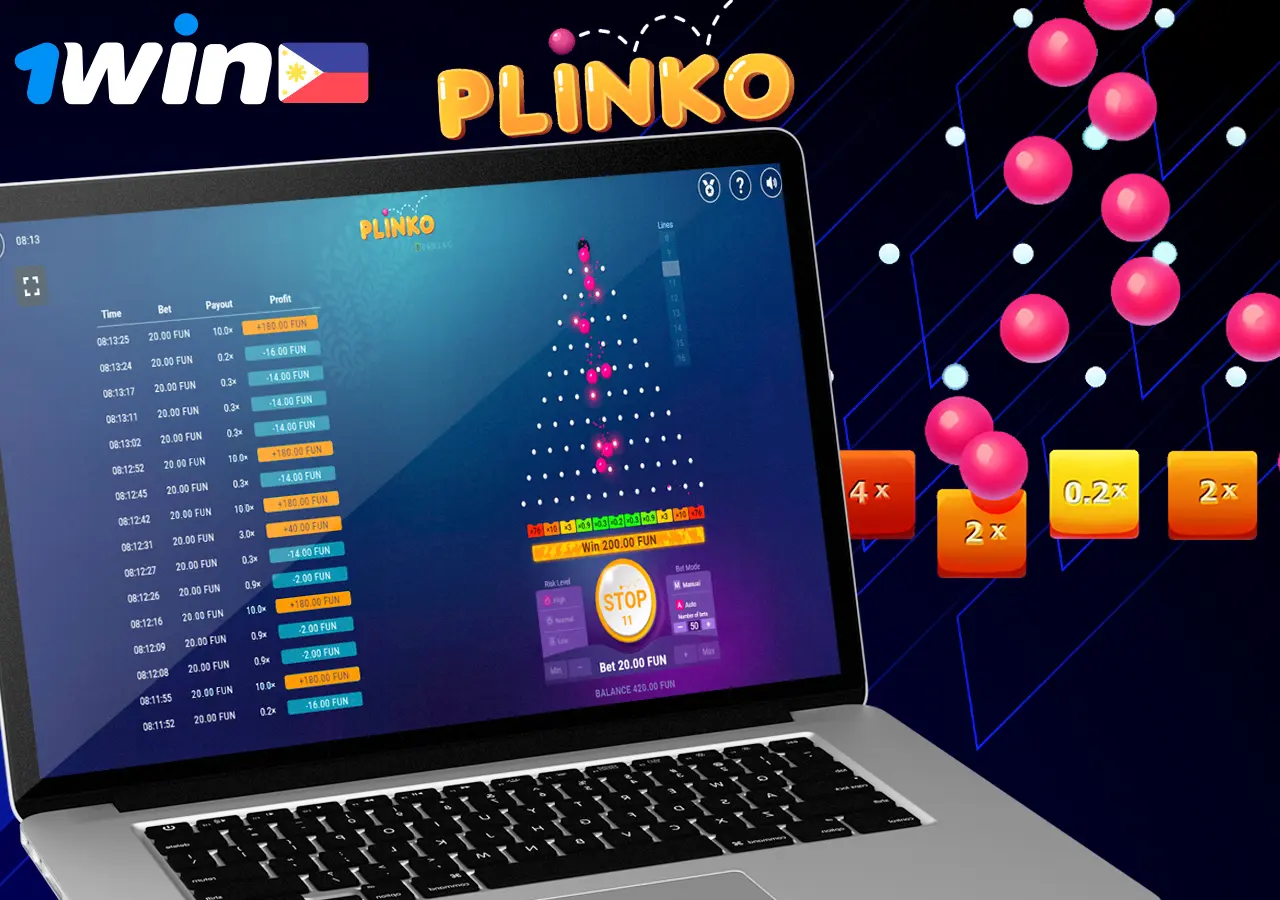
Modern technology has allowed us to create highly sophisticated simulations of the Plinko game. Simulations help players visualize the effects of physics in real-time and can be an invaluable tool for developing strategies. Using algorithms and random number generators, developers create virtual Plinko boards that mirror the unpredictable nature of the physical game.
1. Computational Models
In a Plinko simulation, a virtual board contains pegs arranged in a triangular pattern. When a player drops a disc, the simulation calculates the physics of its descent based on the forces we discussed earlier. This includes the random angle of each collision with the pegs, which is adjusted based on the variables such as speed and the surface of the pegs. Various computational models can be developed to simulate these interactions, ranging from basic physics engines using simple calculations to more advanced models that include real-time physics.
2. Probability and Predictive Analysis
By running numerous simulations, players can analyze the probabilities of landing in various slots based on the initial drop point. These insights can inform strategies about where to drop the disc for better payouts. Although the game retains an element of luck, understanding the physics and probabilities involved can help mitigate risk and enhance decision-making.
Impact on Strategy
The randomness of the Plinko game means that no strategy will guarantee a win every time. However, by grasping the underlying physics, players can make informed choices. Here are a few strategies that can be drawn from an understanding of the game:
1. Understanding Drop Points
Many players choose drop points based on observed patterns from previous games. While randomness dictates outcomes, players can sometimes notice trends that suggest certain slots are more frequently hit. By analyzing the distribution of results through simulations, players can hone in on drop points that yield higher returns.
2. Adjusting for Variables
By considering external factors such as the weight of the disc, the angle of the board, and the height from which it’s dropped, players can develop insights into how these elements influence the game’s outcomes. Adjusting drop points according to these variables can provide a competitive edge.
3. Managing Expectations
One of the most significant advantages of understanding the physics behind Plinko is in expectation management. Players who are aware of the game’s inherent randomness are less likely to be swayed by short-term results or emotional reactions. Instead, they can approach the game more analytically, focusing on long-term strategies rather than immediate outcomes.

Conclusion
The Plinko slot physics simulation deepens our appreciation of the game’s mechanics and offers players valuable insights that can enhance their overall experience. Though chance plays a significant role, an understanding of the underlying physics can help demystify the game’s unpredictability. As we continue to explore the intersection of physics and gaming, Plinko stands as a prime example of how scientific principles can illuminate even the most playful of activities. Whether played in person or through advanced simulations, Plinko will always remain a fascinating journey through the depths of randomness and strategy.